I woke up in the middle of the night with this sentence in my head: “Love is not a good in itself, it’s a miracle”. My intuition was so strong that it prompted me to get up and write it down. It must mean something. This sentence appeared to me like a bolt of lightning, in the middle of nowhere! So I decided to expand on the subject and share this little post.
We all agree that love is a complex phenomenon. I turned to the philosophical side of love to find an answer to all this. Often described as a miracle because of its transformative power, love nevertheless remains elusive and mysterious in its essence. Difficult to define, even impossible to explain.
If I may return to my sentence, love can be considered not as a “good” in the materialistic sense of the word, but rather as a moral or spiritual “good”. It’s not something we can possess or accumulate, but an experience that changes us, that can even transcend us and enrich us from within. I’d even go so far as to say that love is never owned, but earned and lived.
What do the philosophers have to say?
On the philosophical side, while researching Love and Miracles, I first miraculously came across a text by Plato, written around 380 BC. The text is entitled “The Banquet” (very well known). It consists mainly of a series of speeches on the nature and qualities of love.
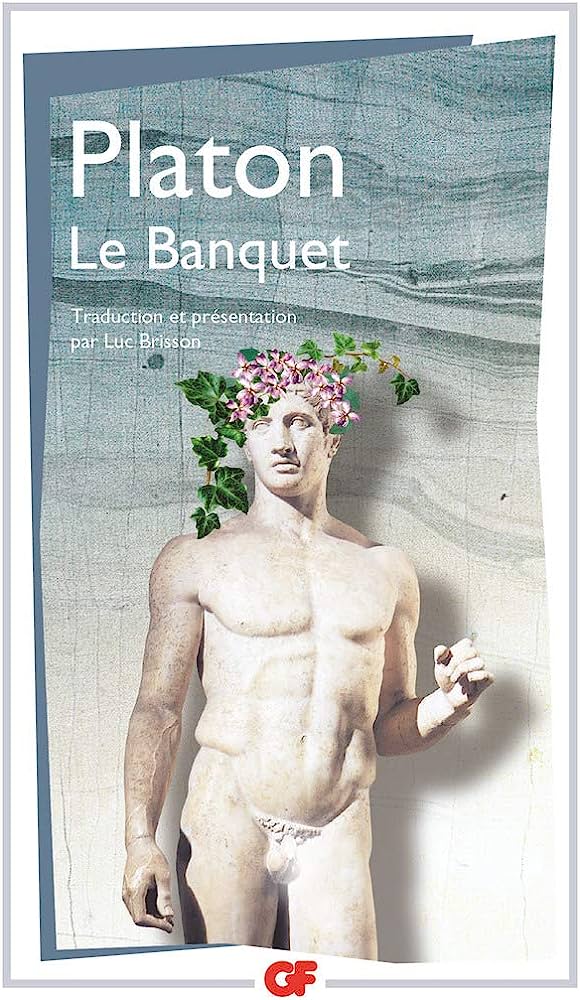
Plato describes love as something that helps people achieve perfect beauty. For Plato, love means not only wanting something in order to possess it, but also wanting to improve and grow as a person. He sees love as a “miracle” that helps us better understand who we are and how the world works around us.
On the other hand, I’ve come down on the side of existentialist thinking. Love is seen as an act of freedom and mutual recognition. Simone de Beauvoir, for example, defends the idea that true love involves recognizing the other in their freedom and otherness, without seeking to possess or control them. In this way, love becomes a “miracle” insofar as it enables an authentic encounter with the other.
Love is indeed a miracle, but we mustn’t forget that love can also be a source of suffering and conflict. Love implies vulnerability, the risk of loss and disappointment. As I delved into this facet of Love, I came across a different vision of love shared by other philosophers, such as Arthur Schopenhauer. They took a more pessimistic view of love, seeing it as an illusion created by the will to live in order to perpetuate the species.
Ultimately, it can be said that love can be seen both as a good in itself, because it’s something good for us, and as a miracle, because it’s something extraordinary, difficult to explain.
It’s a good in the sense that it enriches our lives, making our lives better, helping us to surpass ourselves and create strong bonds with other people.
It’s a miracle in the sense that it changes, it can even transcend our existence and open us up to an experience of reality beyond our rational understanding.
But like all miracles, like everything extraordinary, love is also mysterious, elusive, difficult to understand completely, and we can never completely control it.
As a result, I haven’t really resolved the “why” that phrase came to my mind like that, what meaning should I give to it? Time will tell!
In the meantime, I’m going to keep digging and reading on the subject. Here are a few references I’d like to share with you:
- Plato, “The Banquet” – This is a famous dialogue on the nature and purpose of love.
- Aristotle, “Nicomachean Ethics” – Although not a text on love per se, Aristotle explores the notion of friendship and love in depth.
- Saint Augustine, “The Confessions” – An important autobiographical work in which Saint Augustine explores the notion of divine love.
- Simone de Beauvoir, “Le deuxième sexe” – Beauvoir explores the idea of love in the context of women’s liberation.
- Erich Fromm, “The Art of Loving” – Fromm offers a psychoanalytical and humanist perspective on love, suggesting that it should be learned and practiced as an art.
- Alain Badiou, “Éloge de l’Amour” – In this book, Badiou argues that love implies risk and a stand against the cynicism of our times.
This should give me a good starting point to begin my philosophical exploration on the subject of love. To be continued.


Leave a comment