Two years ago, in February 2022, I experienced my first Vipassana retreat. Ten days of absolute silence, without reading, without distraction, without contact with the outside world. An experience that was both brutal and deeply transformative. But life quickly resumed its course and, little by little, this profound calm faded.
In a few days, from March 5 to 16, I will relive this adventure. Ten new days of total silence, without any exchange, in a meditation center where you don’t even meet the gaze of the other participants. A place where every moment is dedicated to one thing: observing and understanding your own mind.
Vipassana is an ancestral meditation technique, rediscovered and taught by Siddhartha Gautama, the Buddha, more than 2,500 years ago in India. Contrary to popular belief, Vipassana is a method of direct observation of reality, accessible to all, regardless of culture or faith.
According to tradition, Vipassana was the technique used by the Buddha himself to achieve enlightenment. For centuries, this method flourished in India before gradually disappearing from its country of origin. But it was preserved in Burma, transmitted from generation to generation by a lineage of practitioners until the 20th century, where it was reintroduced into the modern world thanks to S.N. Goenka, a Burmese teacher of Indian origin.
Today, Vipassana is taught in centers around the world, through completely free 10-day retreats, organized by volunteers. Far from being a simple relaxation technique, it is a real mental training, which allows us to understand the mechanisms of the mind and cultivate equanimity in the face of life’s hazards.
I still remember the moment I set foot in the center in 2022.
It was in the middle of nature, lost in the middle of nowhere, far from the hustle and bustle of the cities. Contrary to popular belief, it is not necessary to go to India to have such an experience. As soon as you arrive, a special atmosphere sets in. The voices are lower, the smiles discreet but benevolent. A strange feeling floats in the air.
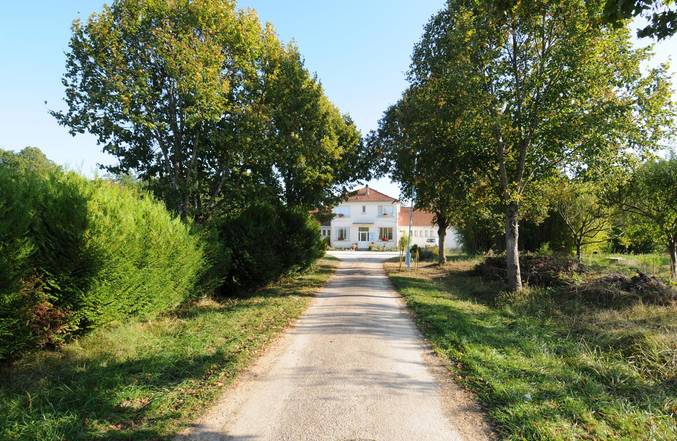
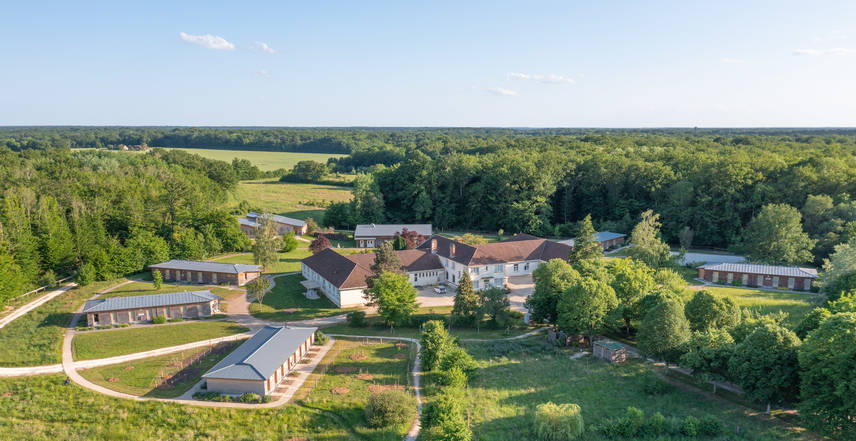
Then comes the first step towards this new world: dropping off all your personal belongings. Phone, notebook, book… everything must be returned. Only a watch or an alarm clock are allowed. During my first retreat, I kept my watch to use as an alarm clock, a way of keeping a minimum of reference points. This time, I will do it differently: I will live completely to the rhythm of the bell that resonates in the center.
It is a simple gesture, but as I hold out my phone, I feel a slight tension. No more messages, no more calls, no more notifications. No more contact with the outside world for ten days. Part of me panics briefly.
Then, almost immediately, relief. This total disconnection is not a deprivation, it is a liberation. No more requests, no more pressure to respond or be reachable. Nothing else to do but be here, fully present.
Once I have dropped off my things, I go to my room. The center offers simple but clean dormitories, as well as a few small single rooms. During my first retreat, I had been given a single room. This time, it doesn’t matter, material comfort is secondary. The essential is played out elsewhere.
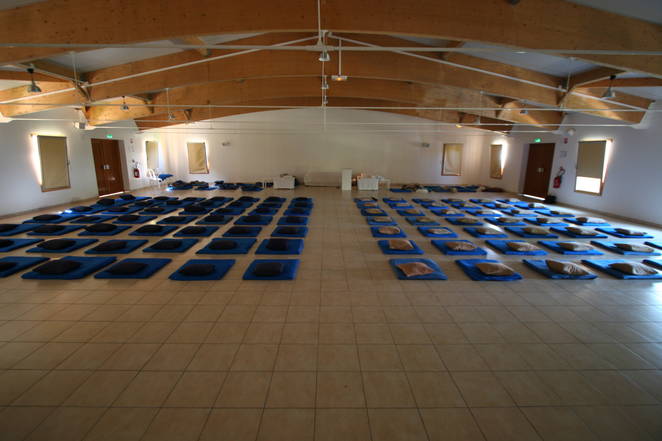
After settling in, all the participants gather in the large meditation room for an introduction. The instructor reminds us of the fundamental rules that will structure our experience. Ten days without speaking, without making eye contact, without any physical or social contact.
During these ten days, we must not escape through a book or a notebook. We must not escape into music or distraction. Everything is done to immerse us in ourselves.
Then comes the moment when silence begins. A few minutes are left to say our last words before the bell rings. From this moment on, the noble silence is established. No more words will be spoken before the tenth day. I realize that I have just entered a totally different space, a universe where language disappears, where thoughts no longer have an escape through speech.
From the first morning, the reality of Vipassana hits hard. At exactly 4:00 a.m., the bell rings. No gradual awakening, no coffee, no scrolling on your phone to connect to the day. Just this distant sound that crosses the dormitory and reminds us that it is time to get up.
Here is the daily schedule, unchanging, which will punctuate each day:
at 4:00 a.m., Wake up
from 4:30 a.m. to 6:30 a.m., Meditation
from 6:30 a.m. to 8:00 a.m., Breakfast and break
from 8:00 a.m. to 11:00 a.m., Meditation
from 11:00 a.m. to 1:00 p.m., Lunch and rest
from 1:00 p.m. to 5:00 p.m., Meditation
from 5:00 p.m. to 6:00 p.m., Last meal, a simple snack for the new students, tea for the old students.
from 6:00 p.m. to 7:00 p.m., Meditation
from 7:00 p.m. to 9:00 p.m., Evening teaching and meditation. Speech explaining the philosophy and practice of Vipassana.
9:00 p.m., Bedtime. I can tell you that we don’t hang around to go to sleep!
There is no moment of distraction. Nearly 10 hours of meditation per day. No escape possible.
We find ourselves facing something that we constantly avoid: time. It does not speed up, it does not fill up with occupations. It is there, raw, motionless. What we usually flee with the daily hustle and bustle, here, we must face it.
At first, I am carried by enthusiasm. I chose to be here.
My entrepreneurial spirit sees this as a challenge. I am ready to dive into the experience.
But very quickly, my mind gets agitated.
Why am I here? Ten days, it’s endless… Did I answer that last email before leaving?Maybe I forgot to do something important. What if someone tries to reach me?
It is fascinating to see how conditioned we are to escape the present moment. How our mind constantly jumps from the past to the future, unable to settle into the moment.
But here, there is no escape, boredom becomes torture ;-). Each minute seems to stretch to infinity.
And this is only the beginning….
And you, would you be ready to try the experience?


Leave a comment